Reader-supported: as an Amazon Associate we earn from qualifying purchases. Disclosure.
Best Creatine for Women Over 40: 5 Picks That Pass the Label Test
Shopping for the best creatine for women over 40 is a different job than shopping at 25. You want the full studied dose, a label you can trust, easy mixing, and a price that makes sense per serving, not per tub. We ranked the five most popular creatine monohydrate products on exactly those facts. No sponsored placements, no invented lab tests.
By CreatineBuzz Research Team. Published October 6, 2026.
We grade creatine on verifiable label facts: dose accuracy, third-party testing, price per serving, and the public research record. Spotted a mistake? See our corrections process.
Why the Shortlist Changes After 40
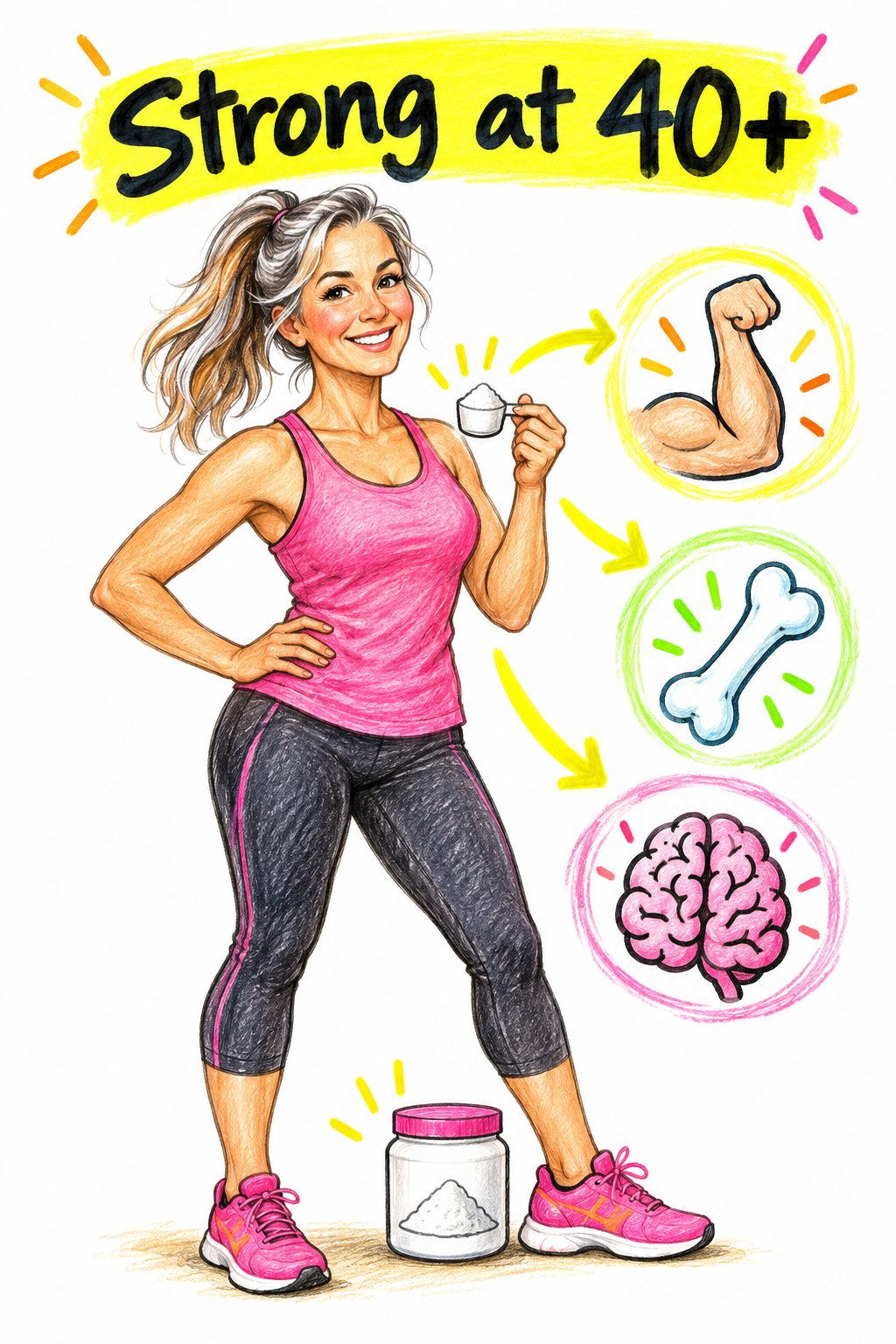
After 40, the creatine conversation shifts. Adults can lose 3 to 8 percent of muscle per decade after 30, and hormonal changes through perimenopause can shrink an already smaller creatine reserve.
Trials combining creatine with resistance training in postmenopausal women report some of the most encouraging strength results in the field. The full science lives in our women's guide and the menopause evidence review.
That changes what you shop for. A gritty powder you dread drinking is a powder you will quit. A product with no independent testing asks for more trust than a midlife buyer should give.
And the per-tub price is marketing; the per-serving price is the truth. This roundup scores five popular products on the facts that matter after 40: the exact dose on the label, independent certifications, the real price per 5 g serving, and how transparent the label is. Prices were checked October 6, 2026 and change often; click through for today's price.
How We Graded: Dose Verification and Cost Math
Every pick below survived the same four checks. First, dose verification: the label must deliver a full 5 g of creatine monohydrate per serving, the dose used in the human trials, with no proprietary blends hiding the amount. Second, third-party testing: we rank the NSF Certified for Sport product seal highest, then other independent banned-substance testing, then published certificates of analysis, then nothing.
Our certification guide explains what each seal actually means. Third, price per 5 g serving, computed from the current price, not the tub size. Run any product through our cost and supply calculator to check our math.
Fourth, track record: years on the market with a consistent formula. Our full methodology, with all five products scored in detail, is the Top 5 ranking.
The 5 Best Creatine Picks for Women Over 40
#1 · Best overall · A+ 9.6
Optimum Nutrition Micronized Creatine Monohydrate
Powder, unflavored, 5 g per serving, 120 servings, about $0.23 per serving
Why it wins after 40: micronized powder disappears into water or a smoothie, so the routine sticks; Informed Choice banned-substance testing; the cheapest certified option per serving.
One serving is exactly the studied 5 g dose. No scoop included: measure one rounded teaspoon.
Honest math first: most creatine gummies carry 1 to 1.5 g per gummy, so a 5 g daily dose means 4 to 5 gummies, plus the sweeteners and the higher per-serving cost. Powder wins on dose accuracy and price in every comparison we ran. Gummies win exactly one contest: the routine you will actually keep.
If powder means you will not take creatine at all, gummies beat nothing. The full format showdown: gummies vs powder.
How to Dose Creatine After 40
Keep it simple: 3 to 5 g daily, every day. Skip the loading phase; it front-loads the water-weight swing for no long-term benefit, and muscles reach the same saturation in about a month on the steady dose. Take it whenever you will remember, with food or a shake if your stomach is sensitive.
No. The research supports the same 3 to 5 g daily dose at any adult age. What changes after 40 is the shortlist: easier mixing, gentler-on-the-stomach options, and third-party testing matter more, which is why this roundup exists.
A 2025 analysis of 685 clinical trials found no significant difference in side effects between creatine and placebo groups, including kidney and liver markers. Trials in postmenopausal women combining creatine with resistance training report strength benefits. As with any supplement, check with your doctor first, especially if you take medication or have kidney disease.
Creatine draws water into muscle cells, which can add a pound or two of scale weight in the first weeks, mostly during a loading phase. It is not fat and it does not build bulky muscle on its own. Skipping the loading phase and using 3 to 5 g daily keeps the effect minimal.
Powder wins on dose accuracy and cost: one serving delivers the full 5 g. Most gummies carry only 1 to 1.5 g each, so hitting 5 g means 4 to 5 gummies a day plus the sugar or sweeteners. Gummies only win if powder means you will not take it at all.
Muscles saturate in about 3 to 4 weeks on 3 to 5 g daily without loading. Noticeable changes in training performance or recovery typically follow over the next month or two, and the research on strength in older adults measures outcomes over 8 to 12 weeks and longer.
References
Kreider et al. Safety of creatine supplementation: analysis of 685 clinical trials. Journal of the International Society of Sports Nutrition, 2025.
International Society of Sports Nutrition position stands on creatine, 2017 and updates.
Product label and certification data verified against manufacturer and retailer listings, October 6, 2026. Prices subject to change.
Affiliate disclosure: Creatine Buzz is reader-supported. As an Amazon Associate we earn from qualifying purchases made through links on this page, at no extra cost to you. Our product picks are editorial and independent. Read the full disclosure.
Not medical advice: This content is for information only and is not a substitute for professional medical advice. Talk to your doctor before starting any supplement.